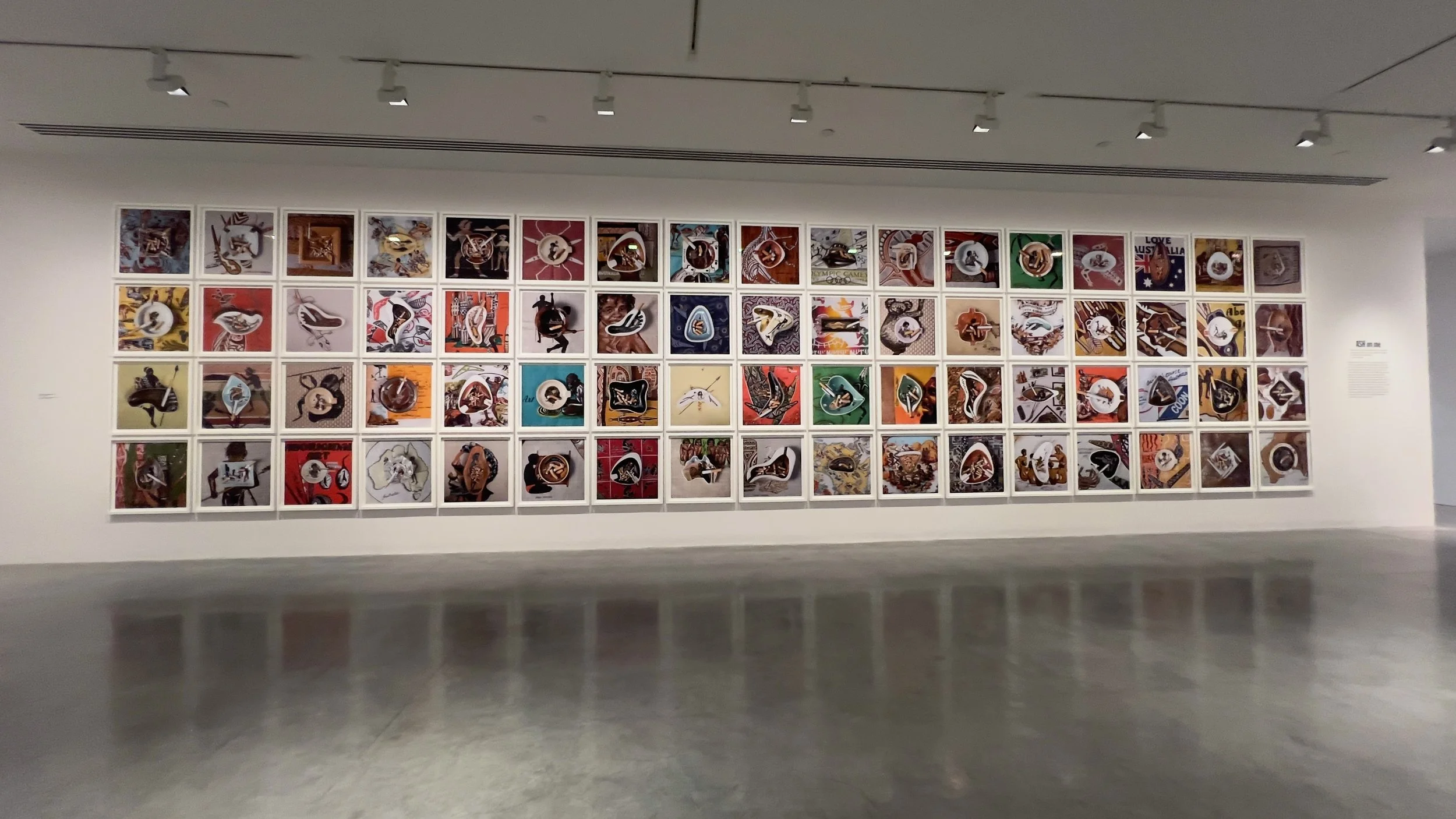
An Exhibition by Tony Albert at the MCA Sydney 21/5 - 19/10 2026
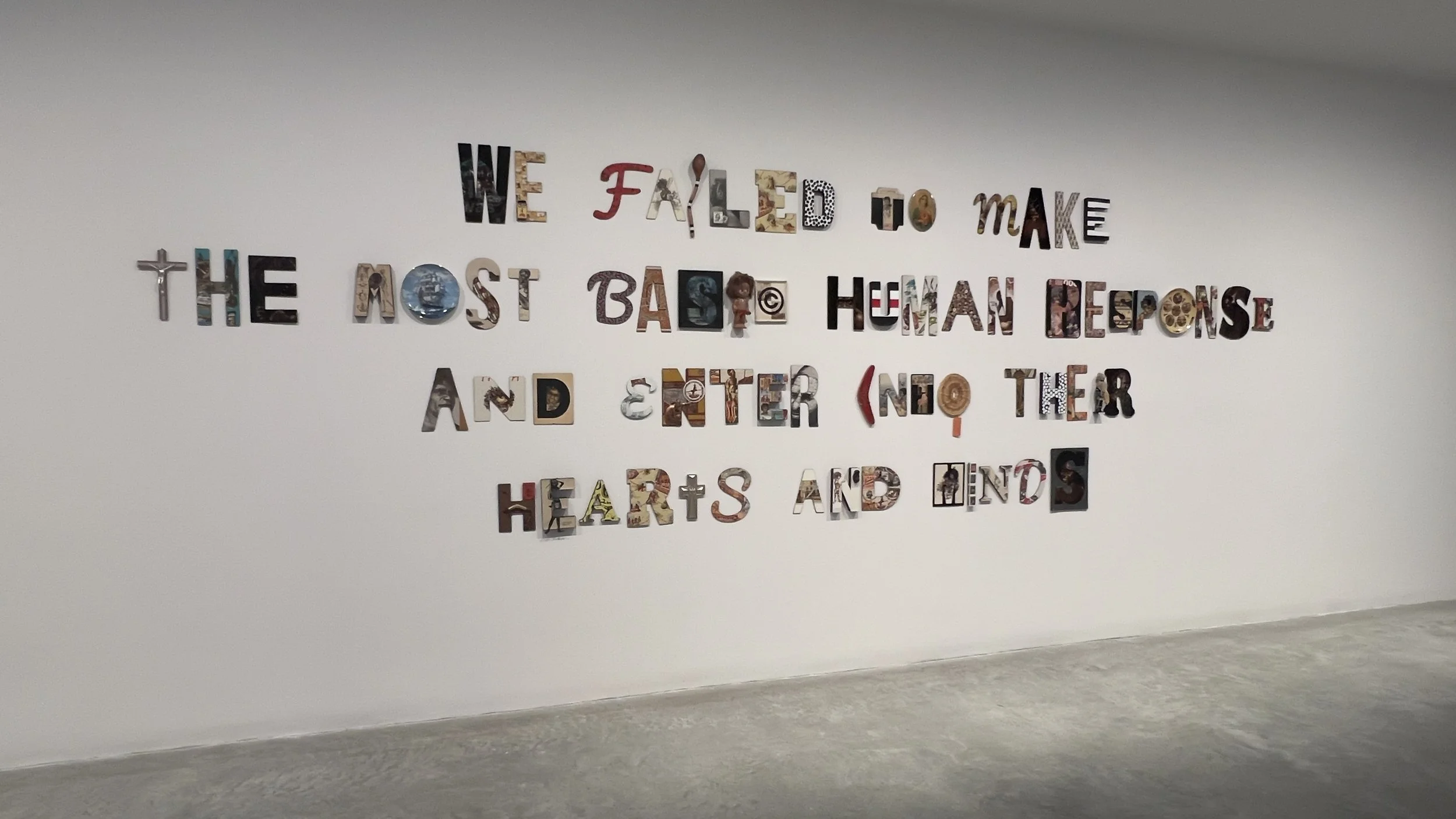
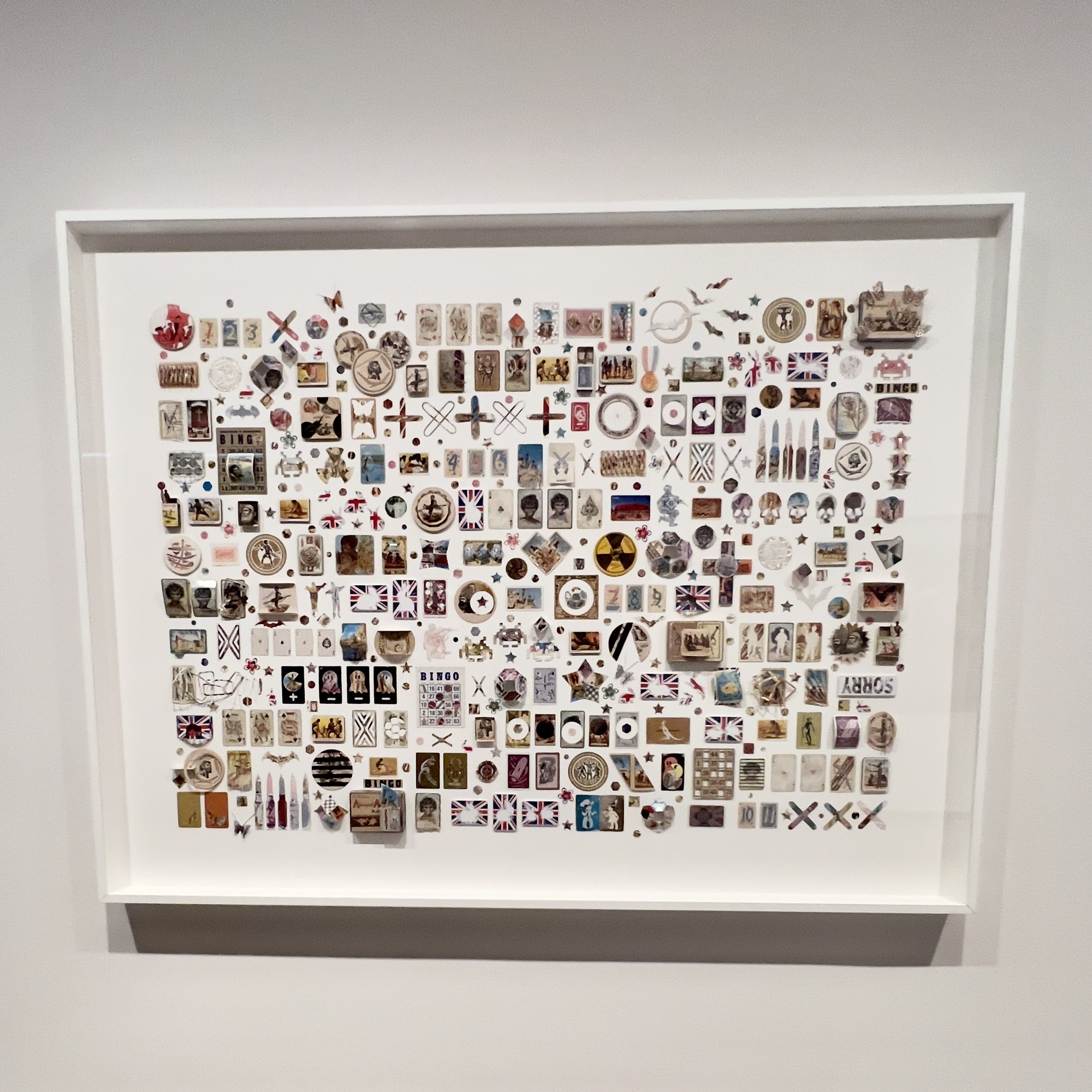
Since I first heard about Tony Albert’s work, I have been fascinated and challenged by it. He seems to flip racism and appropriation on their head. This exhibition presented an extensive group of works created from a vast collection of mass-produced objects featuring caricatures of Indigenous peoples and cultural designs. The works honour Aboriginal survival and challenge the misrepresentation of Indigenous people by recontextualising the imagery and forms. By using his collected ‘Aboriginalia’, he reclaims Indigenous imagery and uses it to help the audience engage in the difficult conversations these works provoke.
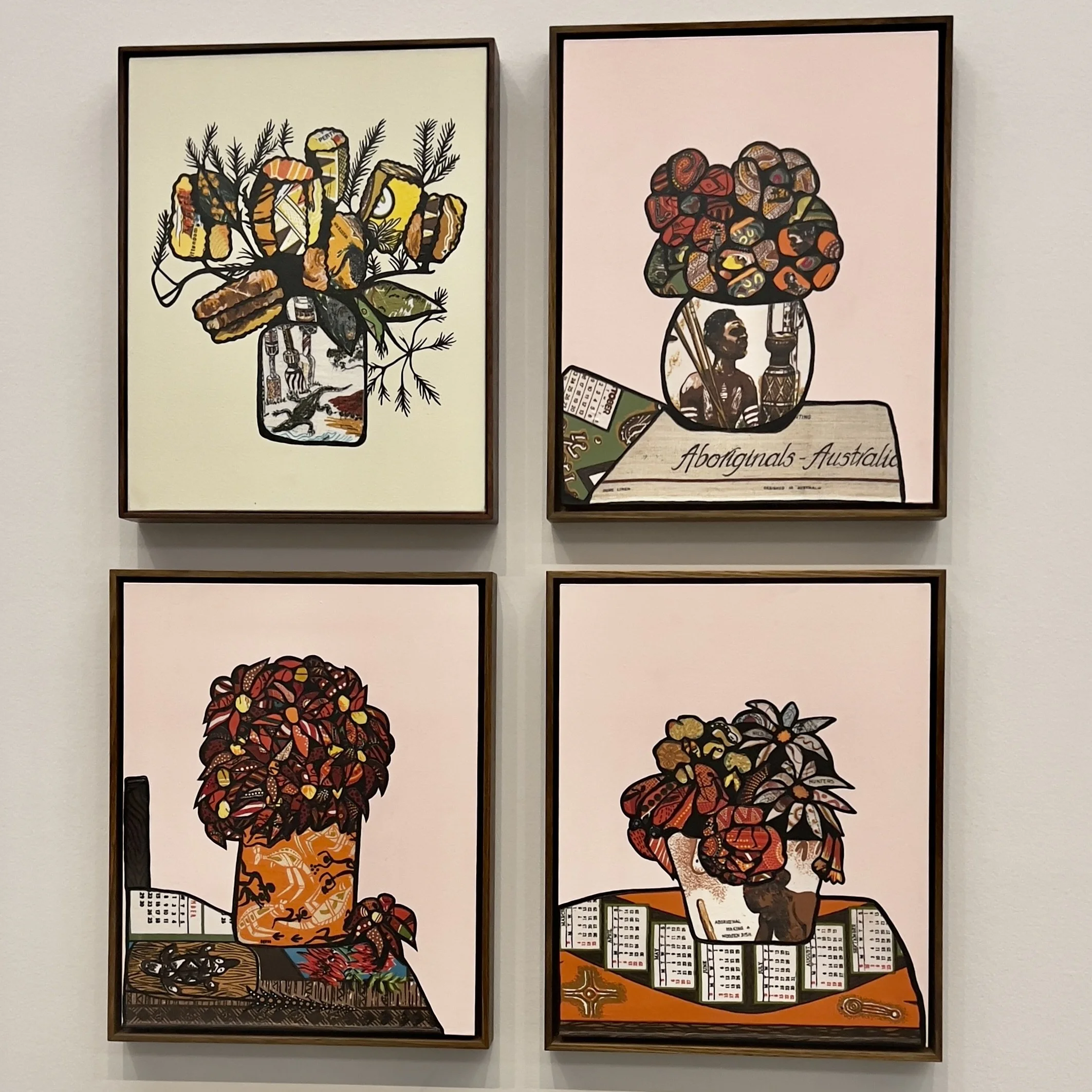
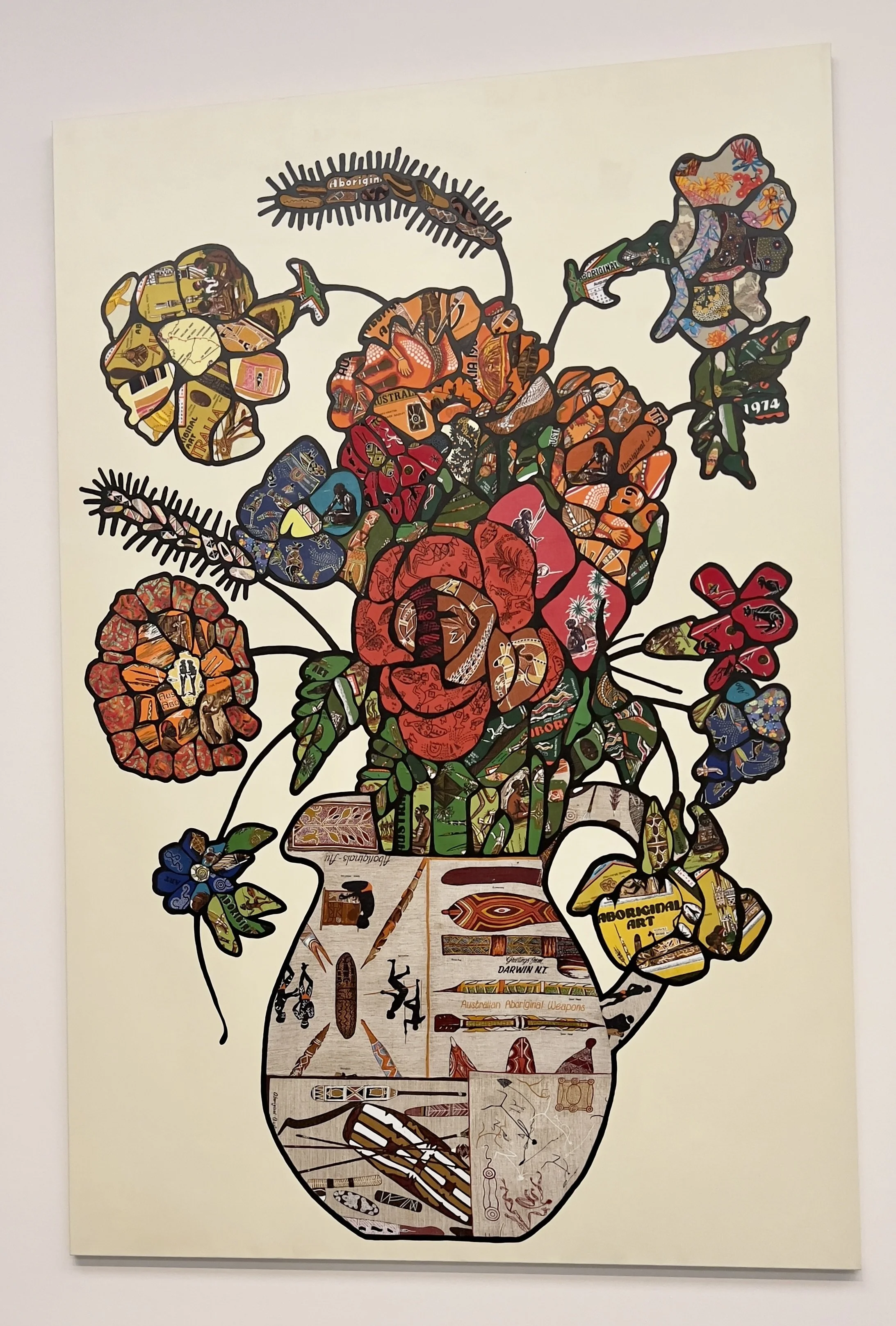
My favourite works in the exhibition were the paintings titled Conversations with Margaret Preston. These works address the legacy of Preston and her desire to be influential in shaping a national visual language in Australian arts and culture. To do this, she appropriated Aboriginal designs and motifs. Albert drew on Preston’s still life works to create collages using paint and vintage fabrics, in order to initiate a discourse around why Aboriginal cultural designs were assimilated by Preston into an Australian identity without cultural understanding or permission. Tony Albert’s work is a reclamation of cultural imagery and identity.
These works took my breath away when I first saw them because of my assumption about what kind of work Albert makes. I wasn’t aware that he had engaged with Preston’s work. Most of them, large in size and powerfully colourful, demand a long look. Their visual connection to something so familiar—as Preston’s work is—invites consideration and acknowledgement. These works sum up what the whole exhibition is communicating: it is an invitation by Tony Albert to be a little uncomfortable but to be sensitive; to have a conversation with yourself and others about Australia’s complex history; to become more understanding of the trauma and damage that our colonial legacy has caused to Aboriginal identity.
I was challenged throughout this exhibition in my thinking and in my responses to what I saw. I saw the generalisation of people and their erasure. The coexistence of beauty and pain revealed a resilience of the peoples represented. Trauma and joy sat side by side. By the end of the exhibition, I did not feel judged or bullied; instead, I was encouraged to contemplate and learn, to understand and to acknowledge beacuse of the tone Albert conveys through his consistent use of colour and text and neat repetition of elements. Albert’s work has challenged me to find ways to give agency to those who may have experienced trauma. The collection of memorabilia displayed is immersive because it is vast and one has to move into and around each room to understand it - the themes cannot be understood by just one glance. The sheer number of objects and the different people and cultures represented are what give agency to be represented on their own terms and a voice to share their own stories. I seek to explore whether an immersive experience made up of many repeated knitted forms can also give agency to be seen and heard to my audience, and possibly suggest hope and repair.