
Trent Dalton
‘Lola in the Mirror’, surprisingly, is not about a girl called Lola. Her name is not given, but we get to know her deeply. Lola is the woman in the mirror that our character seeks wisdom from. Lola is a metaphor for fractured identity and how self-perception is explored. Dalton writes this novel in a charming, melancholy manner, with moments of joy and moments of loss. The characters are based on the stories of the many homeless people Dalton met as a reporter in Brisbane. Some characters are an amalgam of several people and others are a singular person. Their stories are gritty, sad, hopeful and sometimes fictionalised.
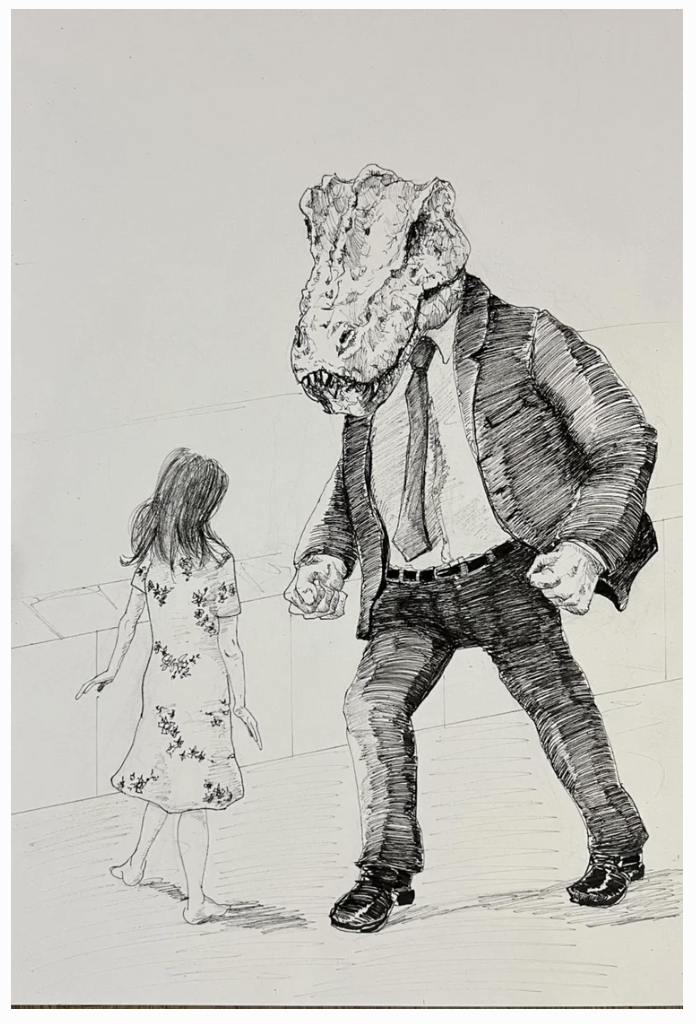
The Tyrannosaurus Waltz
Dalton centres the book on domestic violence - which he calls the Tyrannosaurus Waltz. The perpetrator is a violent figure, and the victims dance around them. I am acutely aware of the trauma of this ‘dance’ and its effects on the identity and memories of the characters. Because of domestic violence, the character is homeless and constantly searching for her identity and where she belongs. She comes to terms with not knowing her own name and begins to understand that her identity arises from who she is. Her body and memories become the site of her identity, rather than having to know her name. Dalton develops the main character by allowing her to engage in bodily experiences to understand her circumstances and self. As he writes, I gain further understanding of themes I am exploring, of embodied experiences and themes of identity and memory. I feel the pain of the characters in my own body, such as when the main character’s mother was trying to rescue a baby from the river and she died; and I get a small sense of the mental and physical trauma these people have experienced. I am reminded of how my knitting practice is an embodied process that acts as a site for memory, trauma and repair.
The main character has also rebuilt her identity over the course of her 18 years through her artmaking. She draws moments in time, capturing the world around her so she can make sense of it. She doesn’t just make pictures; she processes difficult experiences through her art. I see that way knitting has become a type of drawing where thoughts and ideas are processed during the making.
For me, the most significant part of this book is how Dalton addresses difficult subject matter with a fairy-tale-like beauty. His writing is captivating and colourful. The language he uses conjures imagery of the experiences and the city in which the stories are set. One falls in love with the good characters, the 18-year-old alcoholic, kind Charlie, and is repulsed by the bad ones, the drug-dealing predator. The contrast of the dark and light, violence and tenderness, is a constant throughout the book, which I am encouraged by. I have been questioning whether art that is created to converse with trauma can also hold some beauty. Dalton shows there is room to communicate hope and a chance for repair. He doesn’t remove the trauma from the figures in the book, but he does shine hope into situations that enable them to understand themselves and so transform in that process. Dalton shows me that my art doesn’t have to just be about the darkness of trauma to communicate its effects. Beauty can coexist with trauma. In fact, moments of joy and optimism contrasted with the shadows of trauma might be what communicates hope and transformation most successfully.
https://www.debbish.com/books-literature/lola-in-the-mirror-by-trent-dalton/