
Throughout my practice, I have been drawn to repurpose and reuse available resources. I have been using scraps left over from creating dance costumes to knit into intuitive, draped forms. It has been an underlying intention, but it has now become a more urgent call. As such, I have sought out artists who work from this basis.
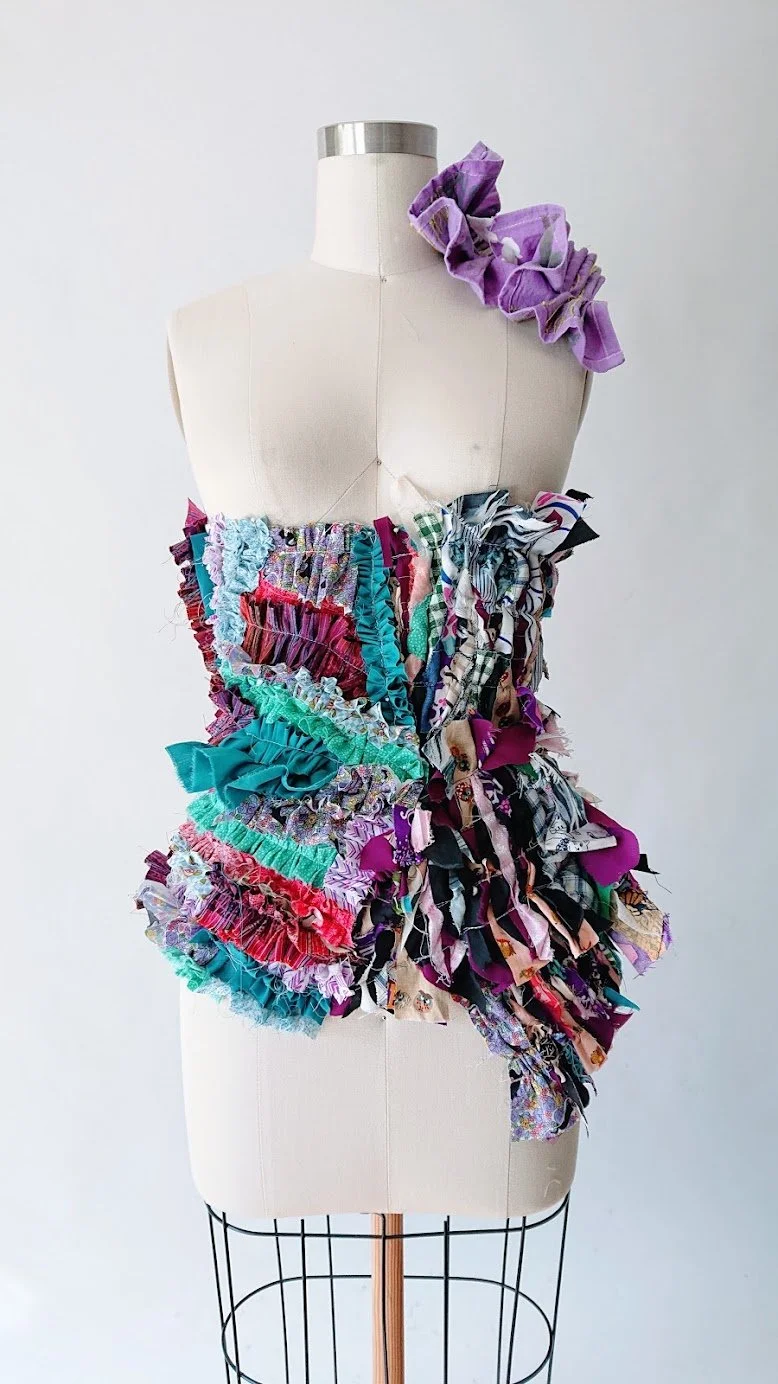
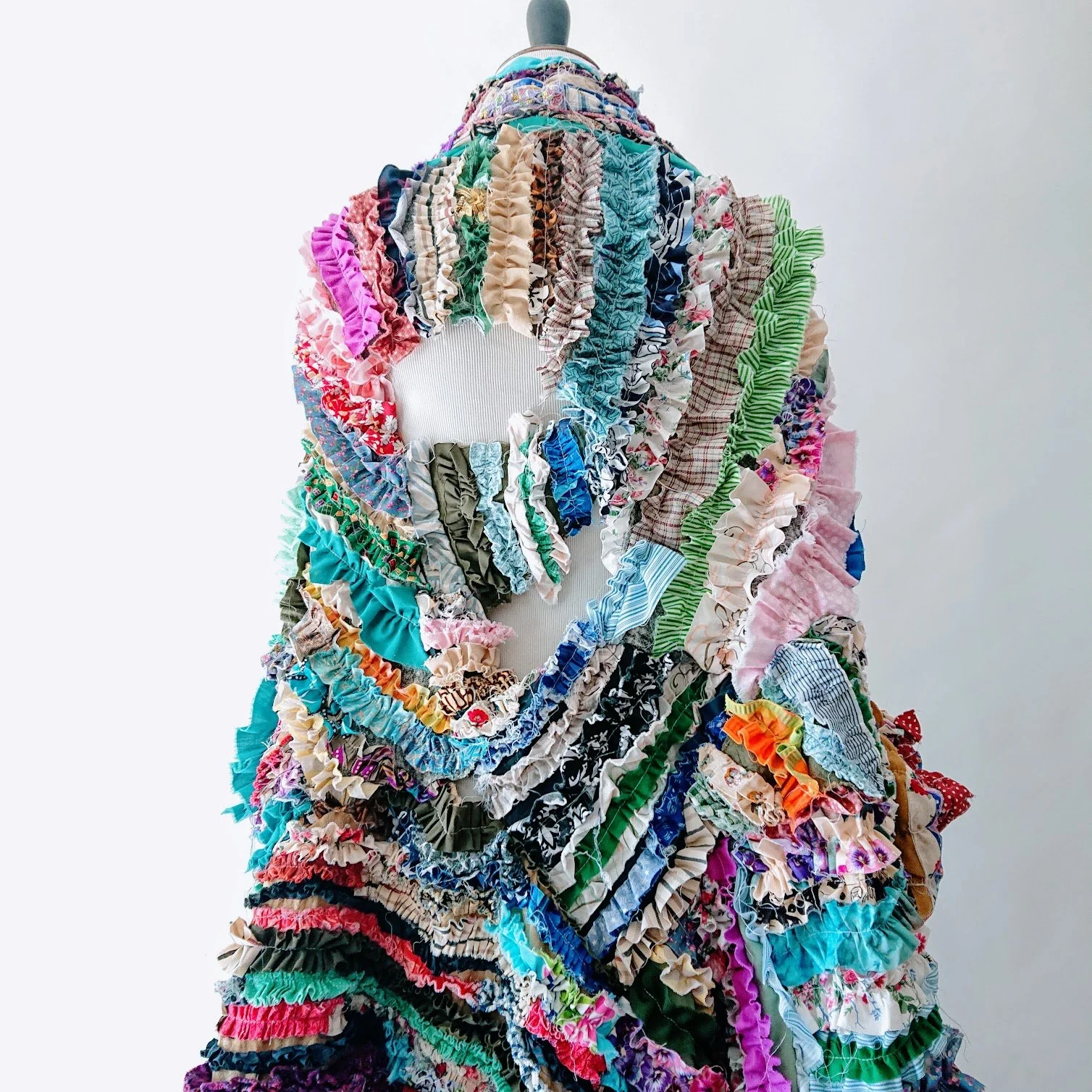
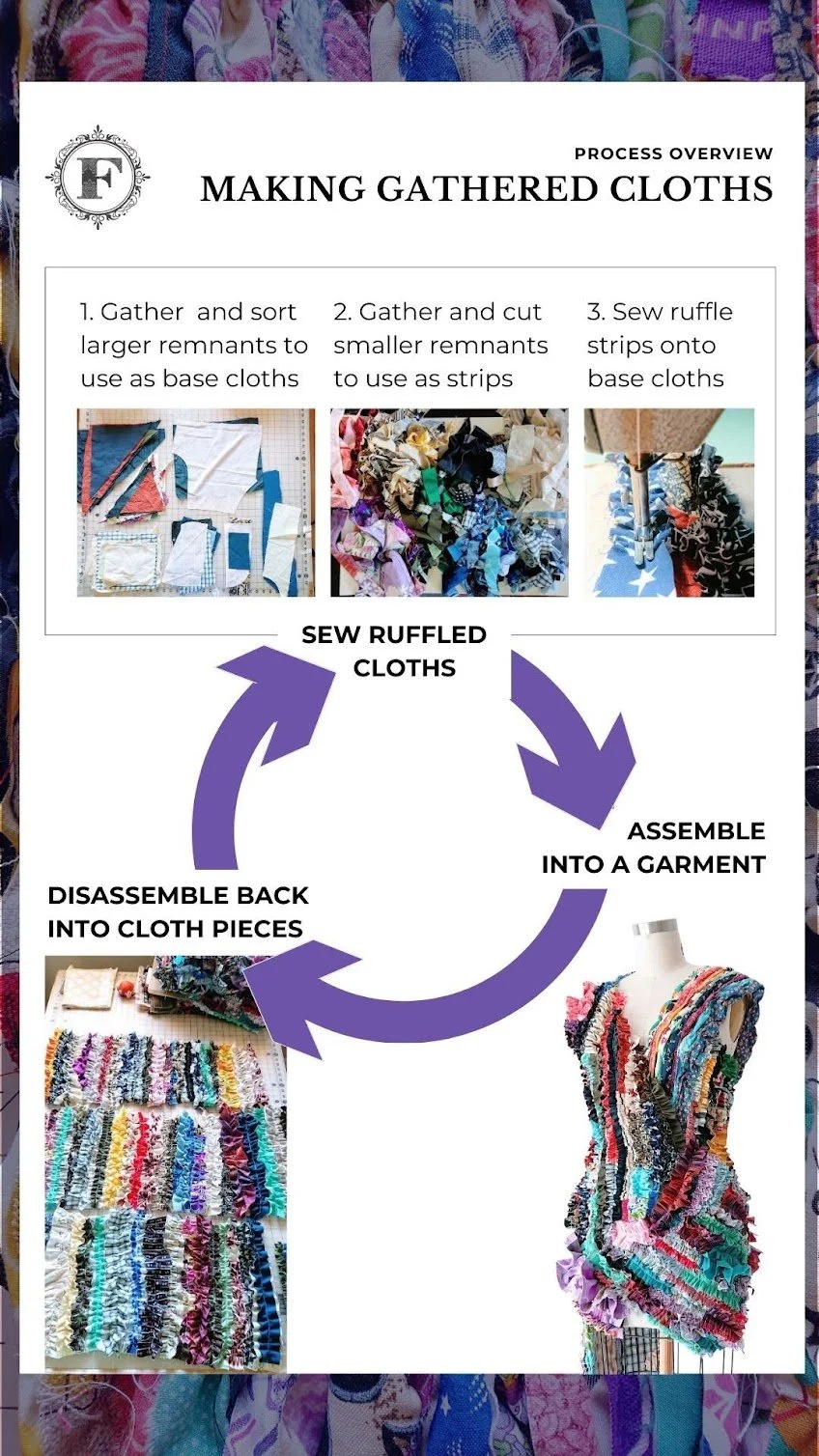
With a focus on the fashion industry and the global waste of textiles, Mira Musank has engaged in a project called Gathered Cloths: The Immersive Experience of Fashioning Textile Waste. She gathers and repurposes textiles into frilled ‘cloths’. These cloths are sewn together to form whole garments. They are then deconstructed to be formed into more iterations of garments, where each subsequent garment becomes larger. This project moved into a virtual reality experience where viewers wore a Gathered Cloth garment, sat on an upholstered chair of gathered cloths and participated in a VR experience of dressing a model in a digital version of the Gathered Cloth Garment and sat on the same chair in a digital version. This repetition of items from real life to digital versions created a safe and accessible space for viewers to engage multisensorily with the artwork. Musank considers the VR experience a great educational tool for fashion enthusiasts that alleviates the anxiety associated with the enormous and overwhelming problem of textile waste.
Musank interrogates the idea that textile waste is the product of a broken relationship, that is, between humans and our use or recycling of textiles. She also questions the notion that if something is only recycled once, does that count, and that when textiles are recycled, they often lose their strength and are then of lower quality. She intends to challenge the overconsumption of a product we use on a daily basis and to cause textile artists to question how the use of textiles isn’t just a one-off process.
In reviewing Musank’s Gathered Cloths, I was captivated by the way she collects, dissects, and pieces together her materials. I have also questioned how I can subvert my overconsumption of the world’s resources, especially in making artwork. Her work reminds me of the history that repurposed textiles hold, that gathering them gives new meaning and that reconstructing them creates a new narrative. Mira Musank’s process is similar to mine in that she gathers, deconstructs and reconstructs. Whilst I resonate with her purpose of drawing attention to sustainable practices, I seek to use the process as a metaphor for the repair of trauma in the body. Her work has made me consider how discarded textiles can communicate fragmentation and healing.
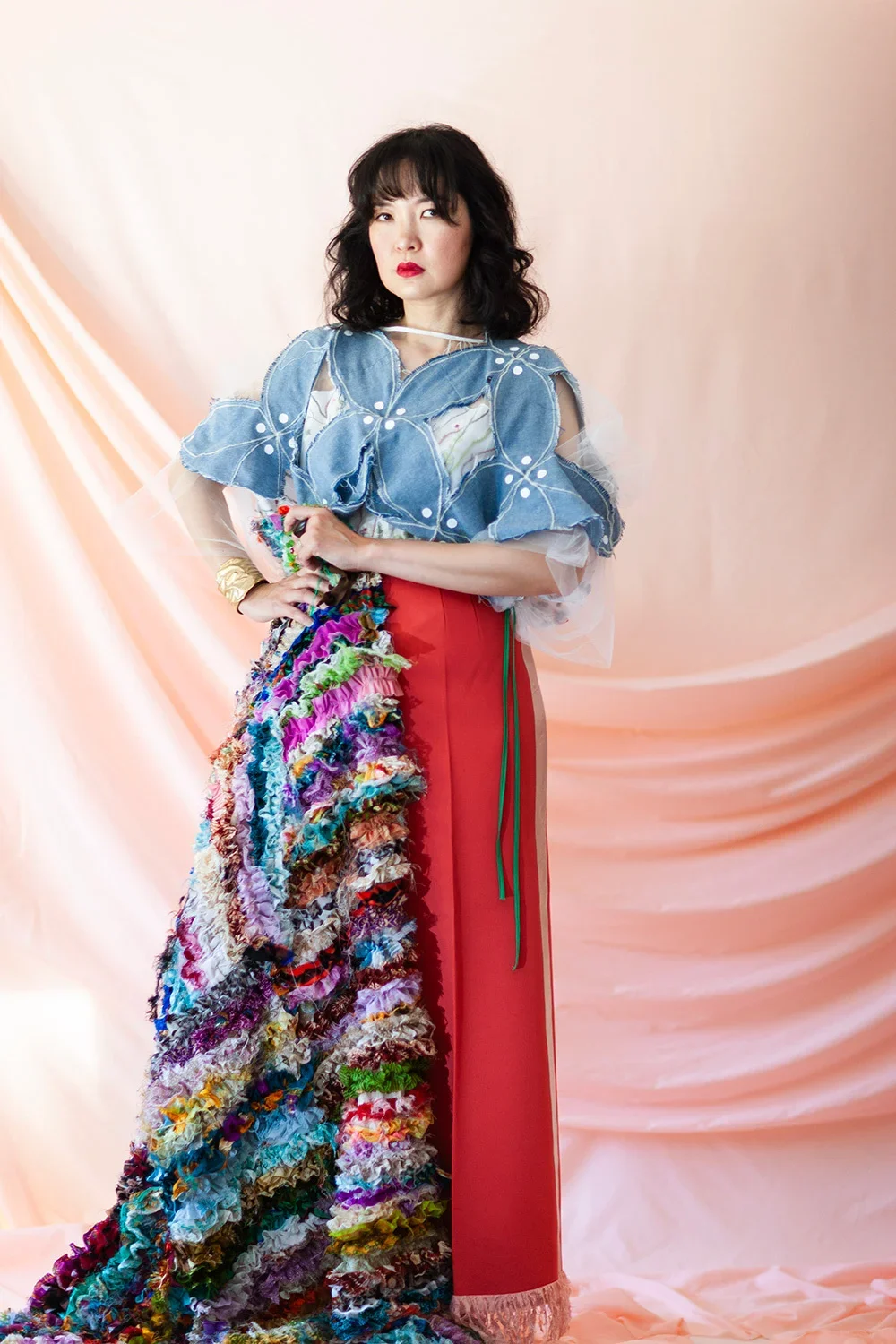
Mira Musank photo by Christian Hadidjaja