
I came across Beili Liu in Dimensional Cloth: Sculpture by Contemporary Textile Artists, by Andrea F. Stanton. This book documents artists who use textiles to tell the story of their place in the world. They explore ideas through materiality and, in doing so, evoke somatic memories. Among the artists mentioned, I was drawn to Liu’s “Lure” because of the repetitive forms, threads, and the immersive suspension. The work is situated in an entire room where red threads create a transparent but impassable curtain. It symbolises the Chinese tradition of belief in soulmates being represented by the long red threads, and this relates to themes I am exploring revolving around the human condition.
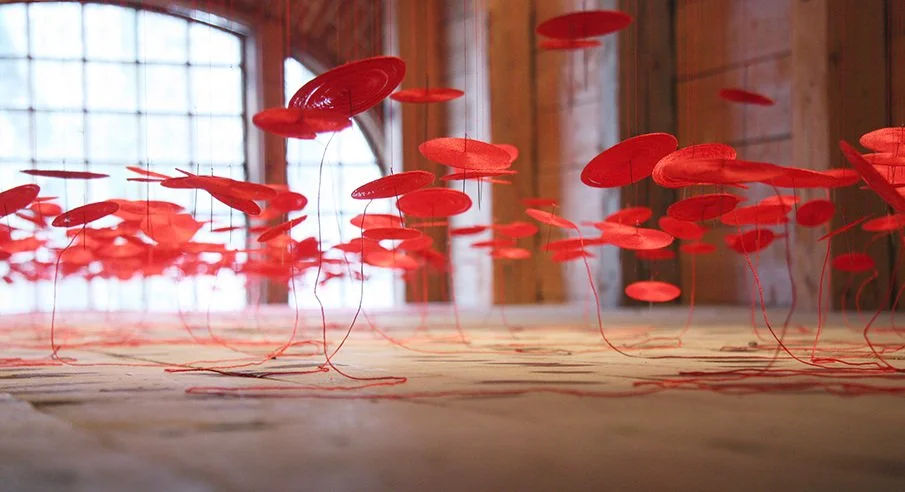
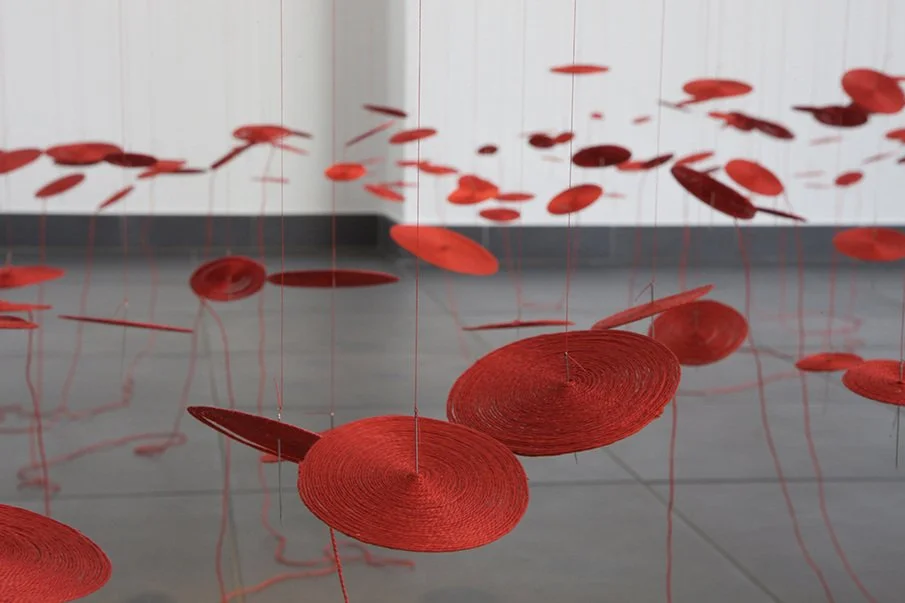
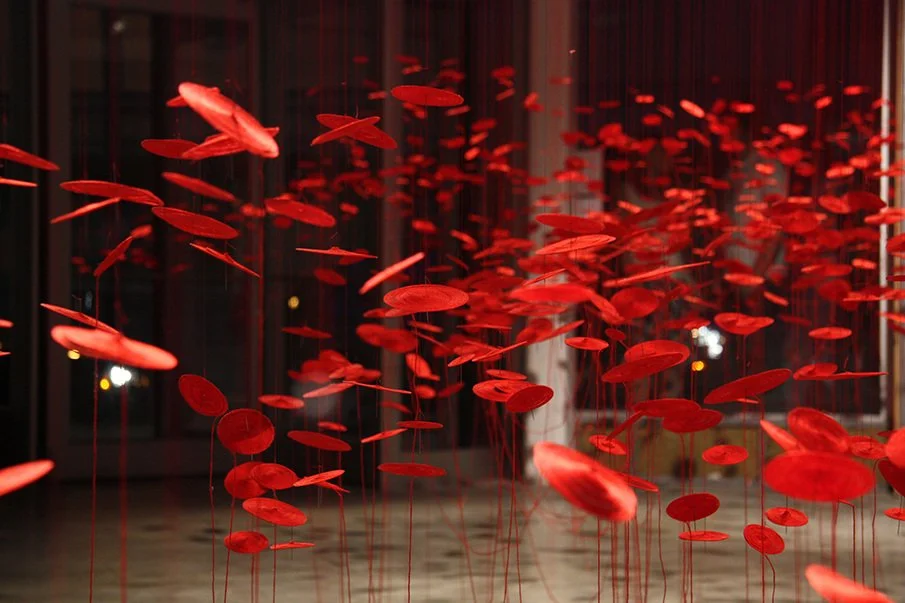
I am drawn to the mesmerising and floating forms she seems to incorporate into all her work. They suggest an ephemeral and light touch to respond to heavy themes of loss and trauma, but honour what it means to be human. “Hold On” (shown below) was created in response to a mass school shooting in 2022 and, at first glance, appears to be a net-like form. Closer inspection revealed that the net is created from the seams of children’s clothing. The fragmented clothing embodies the lost figures from the shooting through their partial absence. By leaving remains of the clothing, a powerful sensation is created. One takes a breath as recognition of what the spaces represent becomes clear.
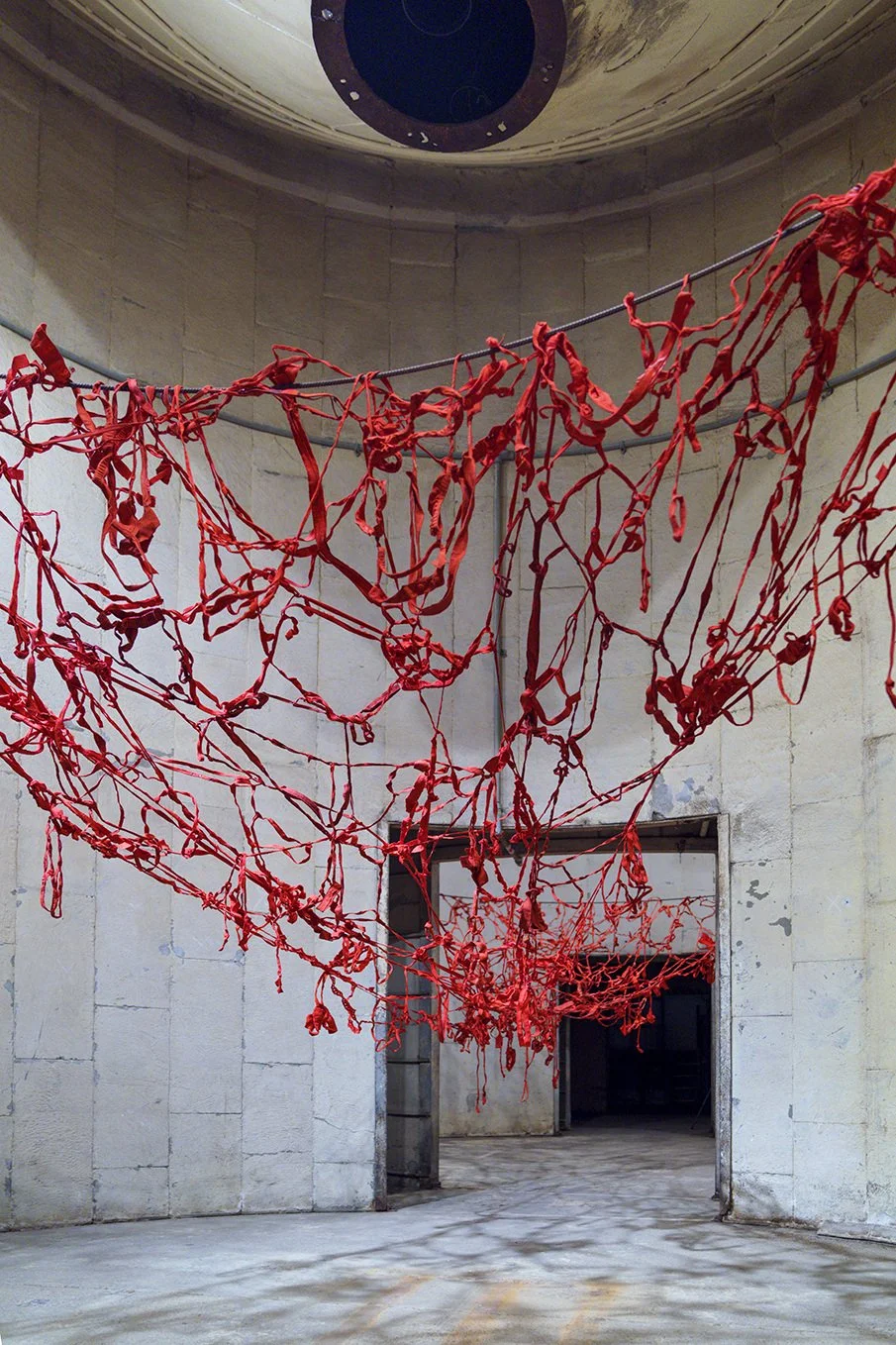
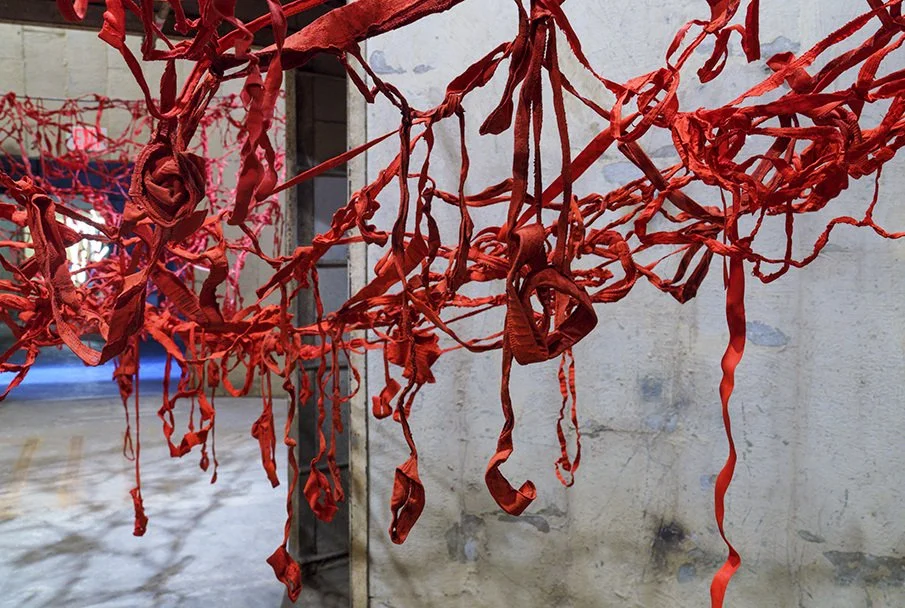
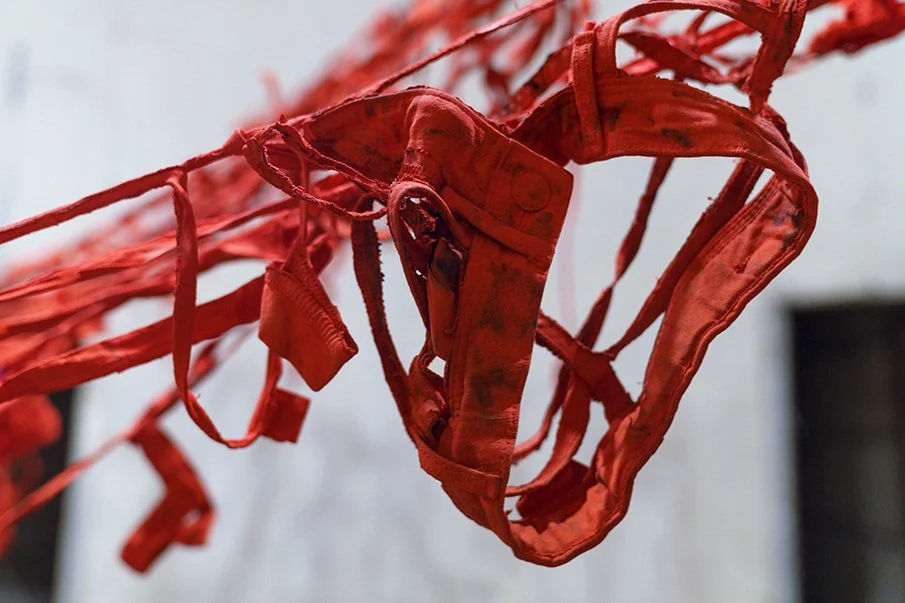
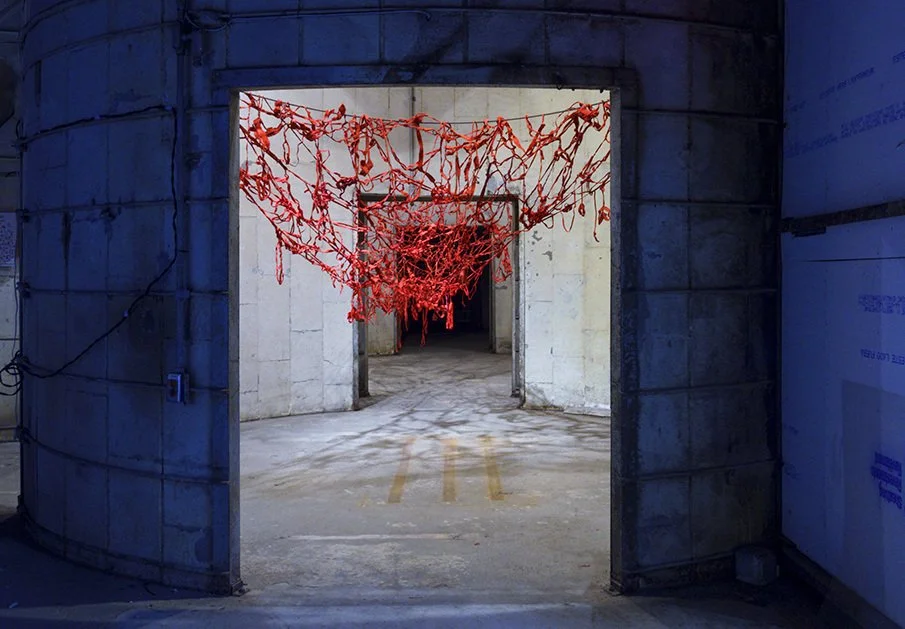
I am interested in Lui’s work because of the way each of these and her other works seem randomly put together, but upon further study, each element has been used in a purposeful manner. Colour has been used in a monochromatic way to emphasise and intensify the narrative. I am also drawn to how the hand of the maker is visible - the works are planned, but there are beautiful inconsistencies in their presentation; the paint on “Hold On” is uneven in places, and there are gaps in the hand-wound discs in “Lure”. The qualities in the works prompt me to think deeply about how a seemingly simple manipulation of materials can create an instant psychological connection.
As I explored Liu’s work further, I discovered an artist who is not only prolific but also creates with care, which strongly resonates with my interest in Care Ethics. She uses everyday items such as needle and thread, salt and wax, to create process-driven pieces that address personal, cultural and environmental concerns. Her work reads as ongoing and attentive care for the communities she addresses. Lui does this through cultural and personal associations of themes of resilience, healing and hope.
In thinking about my own work, Liu inspires me to challenge the materials I use - not to force them to sit in a way that is contrary to their character (think Vibrant Materials), but to process deeply what the materials may say in conjunction with my themes of trauma and its effect on the body. For instance, how can I represent the body through my repurposed fabrics without physically representing the body? Her body of work also encourages me to use repetition of elements, so that together, they become an immersive experience. Immersion often makes the most psychological impact. The challenge I seek to address is how I, too, can show the hand of the maker in a way that emphasises my narrative of the effects of trauma on the mind and body, and, in doing so, enact a form of artistic care that holds both trauma and the possibility of hope and healing.